- PRISM 2026 highlights industry-led skilling models, workforce transformation and excellence in logistics training
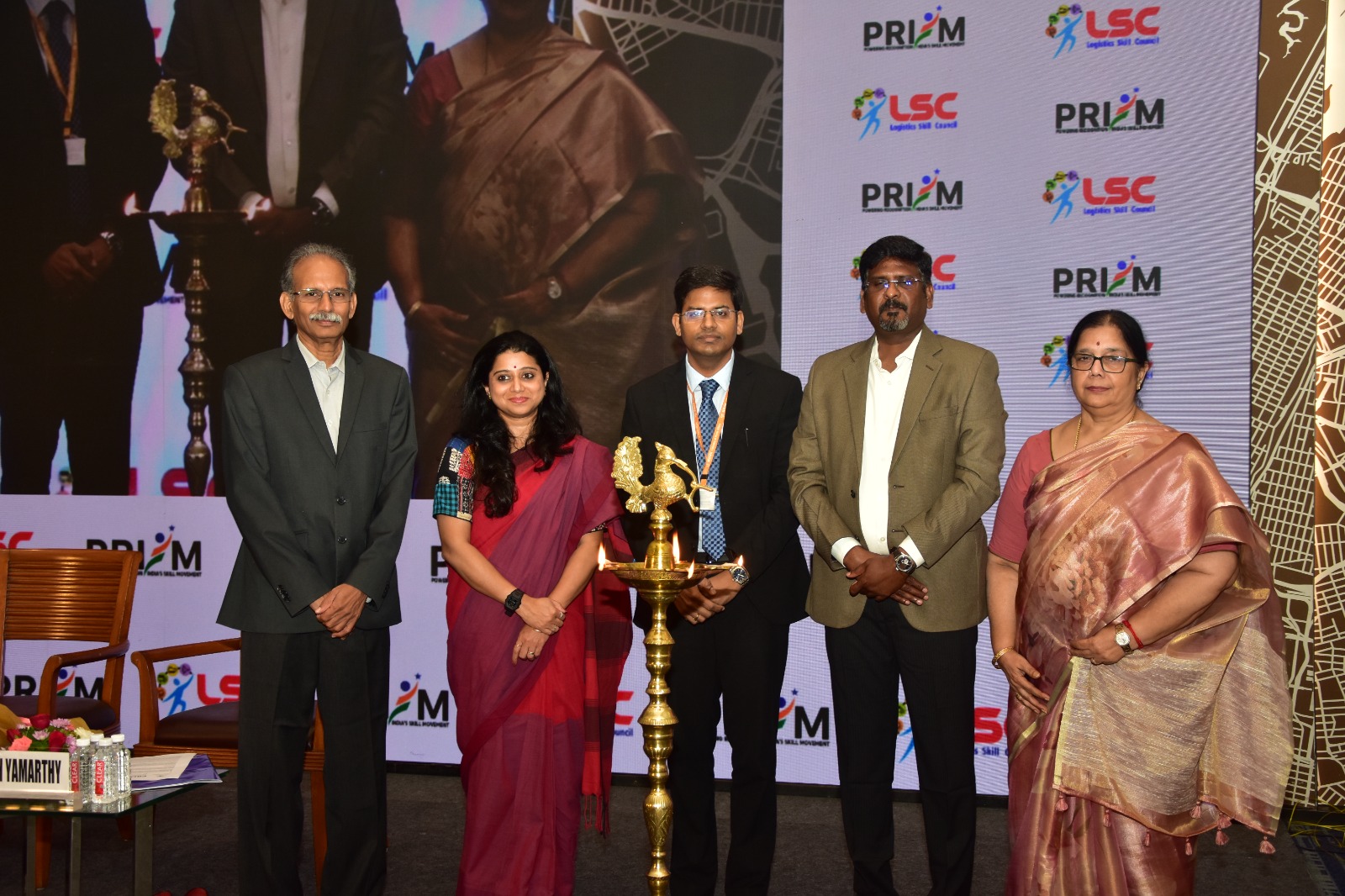
Ahmedabad, 24 July 2026: Organized by the Logistics Sector Skill Council (LSC) with the support of the CII Institute of Logistics, PRISM 2026 – Powering Recognition: India’s Skill Movement successfully brought together policymakers, industry leaders, employers, academia, training partners, assessment bodies, and other key stakeholders from across the logistics ecosystem to drive dialogue on building a future-ready workforce and recognize excellence in logistics skill development across India.
Speaking on the occasion, Mr. Ravikanth Yamarthy, Chief Executive Officer, Logistics Sector Skill Council, said, “India’s logistics sector is undergoing rapid transformation driven by infrastructure development, digital technologies, automation and expanding multimodal connectivity. To sustain this momentum, the industry requires a workforce that is skilled, adaptable and future-ready. The Logistics Sector Skill Council remains committed to bridging industry requirements with the national skilling ecosystem through occupational standards, certifications, apprenticeships and partnerships with academia and industry. As technologies continue to reshape logistics, continuous upskilling, greater industry participation and increased inclusion of women in the workforce will be essential to building a globally competitive logistics ecosystem. PRISM provides a collaborative platform to strengthen these partnerships and accelerate workforce transformation in line with India’s logistics and economic aspirations.”
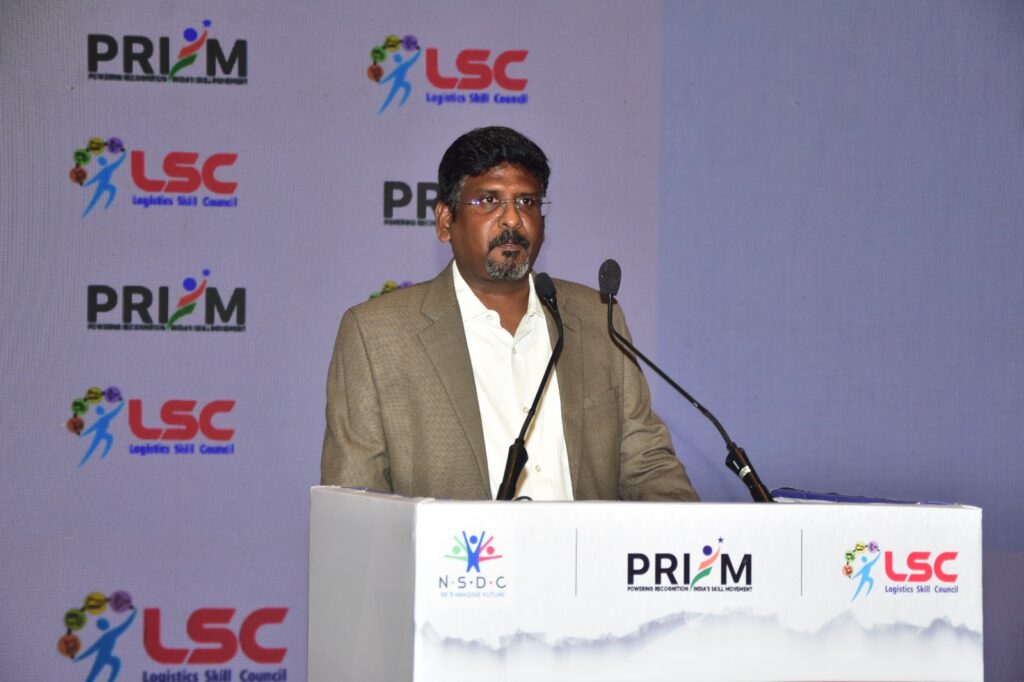
The conference served as a national platform to strengthen India’s logistics talent pipeline through industry-led skilling, technology-enabled learning and collaborative ecosystem development. Through expert-led discussions and the PRISM Awards, the event showcased scalable skilling models and best practices aimed at building a globally competitive logistics workforce aligned with India’s growth ambitions.
The inaugural session featured Mr. Ravikanth Yamarthy, Chief Executive Officer, Logistics Sector Skill Council who delivered the welcome address, followed by the theme address by Mr. K. V. Mahidhar, Executive Director, CII Institute of Logistics. Shri Praveen Kumar, Deputy Director (Logistics), Department for Promotion of Industry and Internal Trade (DPIIT), Government of India, delivered the special address, while Ms. Arati Nandi, Deputy General Manager – SSC Collaboration, National Skill Development Corporation (NSDC) delivered the inaugural address. The session concluded with closing remarks by Mr. Ravikanth Yamarthy, Chief Executive Officer, Logistics Sector Skill Council.
Addressing the gathering, Shri Praveen Kumar, Deputy Director (Logistics), DPIIT, said, “India’s logistics transformation under the National Logistics Policy is being driven by investments in infrastructure, multimodal connectivity, digitalisation and process reforms. However, these initiatives can achieve their full potential only when supported by a skilled and future-ready workforce. The National Logistics Workforce Development Strategy and the Skill Gap Study undertaken by the Logistics Sector Skill Council provide a strong roadmap for developing the talent required to support the sector’s future growth. DPIIT remains committed to working closely with the Ministry of Skill Development & Entrepreneurship, National Skill Development Corporation, the Logistics Sector Skill Council and industry stakeholders to ensure coordinated implementation of skilling initiatives aligned with the National Logistics Policy and the vision of Viksit Bharat.”
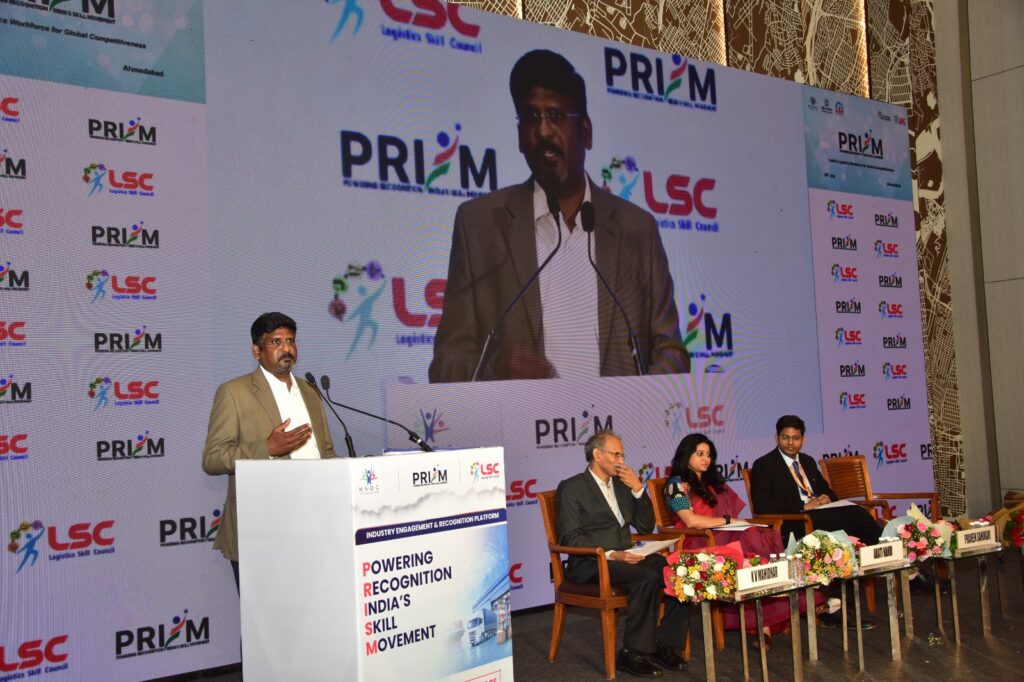
The first panel discussion, “Building a Future-Ready Logistics Workforce: Understanding Skill Demand and Sectoral Transformation,” was chaired by Mr. Abhishek Shrivastava, Regional Head – West (GM), TCI Supply Chain Solutions. The panel featured Mr. Shivanand Patil, Head – Education, Consulting & Skilling (ECS), Arvind Limited; Mr. Subhanish Malhotra, Group Chief Human Resources Officer, Simpolo Tiles and Bathware; Dr. Ashish Joshi, Professor, School of Management and Finance, Kaushalya – The Skill University; and Mr. Vivek Sharma, Head of Learning & Development, Zydus Biologics.
The discussion explored workforce and skill gaps across logistics sub-sectors, apprenticeship and on-the-job training models, regional workforce mobility, digital inclusion, emerging skill requirements and stronger collaboration between industry and academia to improve employability.
The second panel discussion, “Workforce 4.0: Preparing Logistics Talent for AI, Automation, Intelligent Supply Chains, Future Trajectories & International Mobility,” was chaired by Mr. Samir J. Shah, Director, JBS Group of Companies. Panelists included Mr. Sanjay H. Dixit, Senior Vice President, Intas Pharmaceuticals; Mr. Mukesh Nandan Jha, Vice President (Head – Commercial, Supply Chain & Logistics), Transformers & Rectifiers (India) Ltd.; Mr. Praveen Kumar, Head of Operations, Nivea India; and Mr. Anukool Yadav, Course Coordinator – Solar & Logistics, Anil Naik Technical Training Centre.
The session examined the growing impact of artificial intelligence, automation and digital technologies on logistics operations, emerging job roles, international workforce mobility, human-machine collaboration and the competencies required for technology-enabled supply chains.
The conference also featured “The SSC Toolkit – Solving Industry Skilling Grievances and Maximizing Government Schemes & Policy Incentives Implementation Support,” with presentations by the National Skill Development Corporation and the
Logistics Sector Skill Council. The session highlighted government initiatives including the Pradhan Mantri Kaushal Vikas Yojana (PMKVY), National Apprenticeship Promotion Scheme (NAPS), PM-SETU and Apprenticeship Embedded Degree Programme (AEDP), while outlining implementation support available to industry stakeholders.
The event concluded with the PRISM Awards, recognising organisations and institutions that have demonstrated excellence in logistics skill development across Industry & Employer Recognition, Academia Recognition, Training Partner Recognition. The awards celebrated impactful initiatives that have delivered measurable outcomes, strengthened industry relevance and contributed to building a future-ready logistics workforce.
PRISM 2026 reinforced the importance of sustained collaboration among government, industry, academia and the broader skilling ecosystem to accelerate workforce transformation and position India as a global hub for skilled logistics talent.